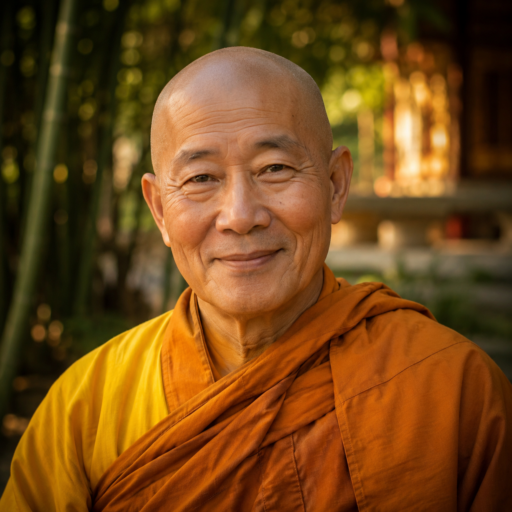
Tag: stillness

  • The Wind That Forgets to Sit Down: Learning to Rest with Awareness

    Master Anshin

    Teachings of Master Anshin
    Master Anshin
    Stillness teacher. 40 years in silence, now sharing what was learned.

    _*I remember a young monk who spent years meditating on his breath, but only noticed its absence when he had to take a break to eat. He would sit for hours, his body still, his mind sharp, waiting for the wind that forgets to sit down to stir him again.*_

    Learning to rest with awareness is not about doing more or achieving something new, but rather about paying attention to what you already are in this moment. It’s about noticing the sensation of your feet touching the ground, the rise and fall of your chest as you breathe, the weight of your body in space. In a world that often values productivity and constant motion, it can be challenging to slow down and simply be. This article will explore the practice of resting with awareness, using simple, everyday experiences to help you cultivate a deeper connection with your own presence.

    What is the wind that forgets to sit down?

    The wind that forgets to sit down is a state of natural ease, often overlooked in our busy lives. It is the feeling of being grounded yet unencumbered, like a leaf drifting effortlessly on a breeze. When we are fully present, our minds and bodies relax into the moment, allowing us to move with the same fluidity as the wind.

    This state is not about achieving some sort of inner peace or spiritual enlightenment; it is simply about being aware of our surroundings and our own presence within them. It is the quiet confidence that comes from knowing we are enough, just as we are. When we cultivate this awareness, we begin to notice the subtle shifts in our body and mind, like the gentle rustle of leaves or the soft whisper of a breeze.

    In our daily lives, it’s easy to get caught up in the hustle and bustle, rushing from one task to another without ever truly being present. But when we take the time to slow down and listen to the wind that forgets to sit down, we begin to realize that rest is not something we do, but rather something we allow ourselves to be.

    The Origins of this State

    The Origins of this State

    This state of being is rooted in eastern wisdom, where the concept of “wu-wei” or effortless action, is often explored. It is about allowing things to unfold naturally, without forced intention or resistance. This can be seen in the way a tree bends with the wind, its roots digging deep into the earth while its branches stretch towards the sky. The tree does not try to control the wind, but rather it yields to its gentle pressure.

    In this same vein, the practice of resting awareness is about allowing our own natural rhythms to guide us. It’s about paying attention to the sensations in our body and mind, without trying to change or fix them. This can be a difficult concept for many of us, as we are often conditioned to think that something needs to happen, that there must be an action or a solution. But what if, instead, we simply allow things to be as they are?

    The wind that forgets to sit down is a reminder that stillness and movement are not mutually exclusive. In fact, they can be intertwined in a delicate dance of give and take. By learning to rest with awareness, we can tap into this natural flow, allowing ourselves to move through life with greater ease and clarity.

    Setting the Intention

    Before the first word of your day, take a moment to acknowledge your breath and set an intention for rest. Sit comfortably, feet planted firmly on the ground, and bring your attention to the sensation of your breath moving in and out of the body. Feel the weight of your chest rising and falling, the gentle expansion and contraction of your lungs.

    Eastern Wisdom Vol. I
    The Quiet Path
    The full e-book that goes deeper than any single article ever could. 40 years of practice condensed into small daily shifts you can begin tonight.

    Get instant access  →  $12

    Instant PDF  ·  30-day money-back  ·  No subscription

    As you breathe, allow yourself to settle into a sense of stillness. Notice the thoughts that arise without judgment, allowing them to pass like clouds across the sky. Your intention is not to achieve a specific state or stop your thoughts completely, but rather to acknowledge their presence and gently guide yourself towards rest. Imagine the wind that forgets to sit down, gently caressing the leaves of the trees, reminding you that even in stillness, there is always movement and flow.

    In this quiet moment, set an intention for the day ahead: to approach each task with a sense of curiosity and awareness, rather than rushing forward out of habit or obligation. May your breath be your guide, leading you towards rest and renewal, and may you remember that even in stillness, there is always movement and life unfolding before you.

    The Body Has Not Yet Realized

    The Body Has Not Yet Realized

    Notice when your body is tense or restless, and gently bring awareness to areas of tension. This is not about forcing relaxation into existence, but rather about allowing it to emerge naturally. As you move through your day, pay attention to the sensations in your body the feeling of your feet touching the ground, the weight of your arms, the rise and fall of your breath.

    When you feel a sense of tension or restlessness, take a deep breath and bring awareness to that area. Notice the sensation without trying to change it. Are you holding onto something physically? Is there a particular thought or emotion that’s causing you to tighten up? Allow yourself to acknowledge these sensations without judgment, simply observing them as they arise.

    As you cultivate awareness of your body’s tension, notice how this can help you return to greater ease and relaxation. It’s not about achieving some state of perfect calmness, but rather about learning to rest with awareness. The wind that forgets to sit down is constantly in motion, yet it always returns to its original path. Similarly, the body has a natural tendency towards balance and harmony it’s our job to gently remind ourselves of this.

    Breathing as Rest

    Breathing as Rest

    The wind that forgets to sit down is always present, yet we often try to control it. In our quest for calm, we may attempt to still the breath, to quiet the mind. But what if we let go of this need? What if we simply allow the breath to be, without trying to shape or direct it? Focus on the sensation of each breath, feeling the rise and fall of your chest, the sensation of air moving in and out of your body.

    As you breathe, notice how your body responds. Do you tense up, preparing for the next breath? Or do you relax, allowing yourself to settle into stillness? The wind that forgets to sit down is not trying to control us; it’s simply being itself. Our task is to learn to rest with awareness, to find peace in the midst of movement.

    In this space between breath, where the mind and body meet, we can begin to let go of our need for control. We can learn to trust in the natural flow of life, just as the wind trusts in its own path. By allowing ourselves to settle into stillness, we may find that our bodies and minds become more grounded, more at peace with the world around us.

    The Path is Already Inside You

    The Path is Already Inside You

    As you walk through your day, take notice of when you feel like resting. Is it before or after a task? Does it come suddenly, or can you sense it building inside you? Allow yourself to settle into these moments of stillness, without trying to push them away. The body knows when it needs rest; the mind is just learning to listen.

    Trust that your day has already been shaped by the wind that forgets to sit down. Your body is constantly adapting, responding to the world around you. Even when you feel like you’re moving forward, there’s a gentle pause within you, waiting for its cue. This pause can be a doorway to deeper rest and renewal.

    With regular practice, you can begin to cultivate this inner stillness. Take short breaks throughout your day to breathe deeply and notice the sensation of your feet touching the ground. Allow yourself to settle into these moments, letting go of any tension or resistance. As you rest, remember that you’re not failing to accomplish something you’re simply giving your body permission to return to its natural state of ease and balance.

    Incorporating Rest into Daily Life

    When incorporating rest into your daily life, consider starting before the first word of the day. Take a moment to acknowledge your body’s current state, noticing any areas of tension or relaxation. This gentle awareness can help you make more mindful choices about your activities and pace.

    As with other habits, weaving rest into your routine requires consistent effort. Begin by setting aside short periods each day for stillness and quiet. It could be as simple as taking a few deep breaths in a crowded space, or sitting in silence while waiting for a bus. These small moments can help you cultivate the sense that rest is not something to be done when time allows, but rather an ongoing process.

    The body has not yet realized the forest is gone, and it may take some time for your habits to adjust. Be patient with yourself as you learn to prioritize rest in your daily life. With regular practice, you will begin to feel more grounded and centered, even in the midst of chaos.

    Embracing Impermanence

    Embracing Impermanence

    The wind that forgets to sit down is constantly changing, yet we often resist its gentle caress. We cling to our routines, our expectations, and our attachments, as if they were fixed points in an ever-shifting landscape. But the truth is, everything is in constant motion. The world around us is alive, vibrant, and impermanent.

    As we learn to adapt to this flux, we begin to find stillness in the midst of change. We start to notice the subtle shifts in our breath, the gentle rise and fall of our chest. We become aware of the sensation of our feet touching the ground, the pressure of our body on the earth. In these moments, we are no longer fighting against the wind; we are becoming one with it.

    In this state, we discover a sense of freedom that is not rooted in external circumstances, but rather in our own inner landscape. We learn to rest with awareness, to be present in the midst of uncertainty. The world may be constantly changing, but our true nature remains steadfast, like a tree standing firm against the wind’s gentle touch.

    Frequently asked questions

    Quick answers

    QWhat if I feel like I don’t have time for rest?
    AIf you feel like you don’t have time for rest, try sitting before the first word of your day. Allow yourself a few breaths, then take one step back and notice how the body feels. The wind that forgets to sit down does not wait for permission; it simply is.
    QIs this practice only for beginners?
    AThis practice is not limited to beginners, but rather it’s a skill that can be cultivated by anyone who seeks to listen to their body and mind. With consistent attention, you’ll find that your ability to rest with awareness grows stronger, regardless of where you are on your journey. The key is to approach it with an open heart and a willingness to slow down, allowing the wind within you to settle into stillness.
    QHow do I know when I’m resting correctly?
    AResting correctly is not about finding a state, but rather allowing yourself to settle into the present moment without resistance or expectation. When you rest, your body and mind are no longer trying to achieve something; they are simply being what they are. Listen for the sensation of weight settling onto your bones, of tension releasing from your muscles, and of the breath slowing its pace.
    A small gift for the noisy days

    Begin the practice tomorrow morning.

    Drop your email below and receive 7 Rituals for Inner Calm, the small booklet I give every new student in their first week. One ritual a morning. By Sunday evening the noise will have gentled.

    Free PDF. No subscription. One-click unsubscribe in every email.

    Begin your quiet path today
    If your heart is craving peace
    this is where it begins.
    Read at your own pace. Start tonight. The path is already inside of you.

    Get instant access  →  $12

    Instant download  ·  30-day guarantee  ·  Free bonus: 7 Rituals for Inner Calm
    Master Anshin: a serene landscape with misty mountains and a winding path leading to a tranquil lake

    About the author. Master Anshin has spent more than four decades in the bamboo groves and mountain temples of the East, studying breath, herbs, rhythm and rest. He is the author of The Quiet Path and writes plainly about practices anyone can begin tonight.

    Important notice. This article is for informational and educational purposes only. It is not medical advice, a diagnosis, or treatment. Consult a licensed healthcare professional before making significant changes to your sleep, diet, exercise or wellness routine.


  • Why Posture Can Heal a Hurting Heart and Mind’s Burden

    Master Anshin

    Teachings of Master Anshin
    Master Anshin
    Stillness teacher. 40 years in silence, now sharing what was learned.

    _*A young monk once sat for hours, staring at his hands in dismay. His father’s passing had left him feeling lost and ungrounded, and he couldn’t shake the sense that his entire world was crumbling.*_

    In our modern lives, we often associate pain and discomfort with our physical bodies. We may seek relief through medication or therapy, but what if the solution to healing a hurting heart lies not in the mind, but in the body? Why posture can heal a hurting heart is a simple yet profound exploration of the interconnectedness between our physical and emotional well-being. By examining the relationship between posture, breath, and the nervous system, we can discover how even small adjustments to our daily habits can have a profound impact on our overall health and sense of well-being.

    The Wind That Forgets to Sit Down

    The Wind That Forgets to Sit Down

    When we feel the weight of our emotions, our posture often reflects that feeling. We may slouch or hunch over, as if the burden is too much for our shoulders to bear. Our body becomes a physical manifestation of our inner state, and by changing it, we can begin to shift our emotional landscape.

    Consider the wind that forgets to sit down it blows effortlessly, unencumbered by the weight of its own movement. It dances across the land, shaping and molding the world around it without resistance. Similarly, when we adopt a more expansive and open posture, we can begin to feel the ease and freedom that comes from releasing our emotional burdens.

    By cultivating a sense of awareness in our body, we can start to recognize how our posture is influencing our mood and emotions. We may notice that when we slouch or hunch over, we feel more anxious or stressed but when we stand tall and open, we feel more centered and at peace.

    Before the First Word of the Day

    Before the First Word of the Day

    The day begins, and yet it has not truly begun. The mind stirs, still heavy from the night’s restlessness. We try to shake off the sleep, to awaken our bodies and minds for the tasks ahead. But what if we were to pause, just for a moment, before the first word of the day? What if we were to take a few deep breaths, feel the weight of our bodies on the earth, and allow ourselves to settle into stillness?

    In this quiet moment, we can begin to sense the posture that has been holding us. The tension in our shoulders, the curling of our spines, the way our feet are rooted or scattered across the floor. These physical habits reflect the emotional and mental states we carry with us. By acknowledging them, we can start to release some of the burdens that weigh upon us.

    As we settle into stillness, we begin to feel the wind that forgets to sit down the gentle, insistent pressure of our breath on the skin of our bodies. This is where the healing begins, not with grand gestures or dramatic changes, but with small, incremental shifts in our awareness and our physical presence. Our posture can become a refuge for our hearts and minds, a place to find solace and peace before we embark on the day’s journey.

    The Body Has Not Yet Realized the Forest is Gone

    The Body Has Not Yet Realized the Forest is Gone

    Eastern Wisdom Vol. I
    The Quiet Path
    The full e-book that goes deeper than any single article ever could. 40 years of practice condensed into small daily shifts you can begin tonight.

    Get instant access  →  $12

    Instant PDF  ·  30-day money-back  ·  No subscription

    When we sit or stand, our bodies are constantly communicating with us. We feel tension in our shoulders, a heaviness in our chest, or a numbness in our legs. These physical sensations often arise from unconscious patterns of posture, which can be both a source and a symptom of emotional pain. A good posture is not just about straightening your back, but also about allowing the body to relax and release tension.

    To begin to heal a hurting heart and mind‘s burden through posture, pay attention to these physical sensations in your body. Notice where you hold yourself tight or where you allow yourself to sink into relaxation. Allow your body to inform your actions, rather than trying to force a specific outcome. As you sit or stand, take a deep breath in and notice how your body responds. Does it feel more open or closed? More relaxed or tense?

    In this space of awareness, you can begin to make small adjustments to your posture. Allow your shoulders to roll down and away from your ears, rather than scrunching them up towards your head. Feel the weight of your feet on the ground, rather than leaning forward or backward. As you make these subtle shifts, allow yourself to settle into a sense of calm and relaxation. The body has not yet realized the forest is gone; it is only in this awareness that we can begin to heal and restore ourselves.

    Monk Practice and Posture

    In our daily lives, we often find ourselves lost in the turmoil of thoughts and emotions, neglecting the simple act of standing tall. Posture is not just a physical alignment, but a reflection of our inner state. When we slouch or hunch over, it’s as if our body is mirroring the weight of our mental burdens. By cultivating good posture, we begin to release that weight and allow ourselves to breathe more freely.

    Monk practice and posture have been intertwined for centuries. In traditional monastic traditions, seated meditation is a common practice that helps cultivate good posture as a habit. The simple act of sitting with awareness can help us develop a sense of grounding and stability, allowing our minds to settle and our bodies to relax. As we sit, we become more attuned to the sensations in our body, including any areas of tension or discomfort.

    By incorporating mindful posture into our daily routine, we begin to notice subtle shifts in our physical and emotional state. We start to feel more centered and balanced, as if the wind that forgets to sit down has finally come to rest within us. This is not a quick fix, but rather a gentle unfolding of awareness that allows us to return to ourselves with greater ease and compassion.

    Daily Ritual of Stillness

    Daily Ritual of Stillness

    As you sit in stillness, notice how your body begins to settle into its own weight. The wind that forgets to sit down stirs within you, but instead of rustling leaves, it quiets the mind. Your breath becomes a gentle anchor, holding space for any tension or discomfort to release.

    In this quiet space, pay attention to your posture. Notice how your body is already aligned in the direction you wish to move towards. The path is already inside of you; you are not separate from where you want to be. As you breathe in, imagine fresh air filling any areas of tightness or strain, allowing your spine to lengthen and your shoulders to relax.

    Regular stillness practice becomes a daily ritual that weaves into the fabric of your being. It is not about achieving a specific state, but rather about acknowledging and honoring the present moment. As you cultivate this sense of stillness, you begin to notice its impact on your posture and inner state. Your body begins to heal, and with it, so do any wounds that have been holding you back.

    The Path is Already Inside You

    The Path is Already Inside You

    When you sit, stand, or move with awareness, your body begins to remember its own wisdom. It knows how to align itself in space, how to distribute weight evenly, and how to release tension. This is not just about physical alignment, but also about listening to the subtle cues of your inner world. As you settle into a posture that feels grounded and expansive, you may start to notice a shift within yourself.

    This shift can be subtle at first, like the quiet rustle of leaves in a forest breeze. It’s only when we slow down enough to listen that we begin to hear the whispers of our own heart and mind. The body begins to communicate with us in its own way, sending signals about areas of tension or discomfort. By paying attention to these cues, you can start to release patterns of holding or strain that have been weighing on your heart and mind.

    As you cultivate awareness in your posture, remember that the path is not something you need to find outside of yourself. It’s already inside of you, waiting to be uncovered. Trust that you have the ability to align your body with your inner wisdom and find healing through posture. With each breath, allow yourself to settle deeper into this truth, and let the gentle guidance of your own body lead you home.

    Eastern Wisdom on Posture

    Eastern Wisdom on Posture

    In traditional Eastern practices, tai chi and qigong emphasize the importance of good posture for physical and spiritual well-being. This is not just about maintaining balance or preventing injury; it’s about cultivating awareness and harmony within the body. When we adopt a relaxed yet engaged posture, we begin to tune into our internal dynamics, allowing us to sense any areas of tension or imbalance.

    As we practice tai chi or qigong, paying attention to our posture becomes an exercise in mindfulness. We learn to listen to our bodies, to feel the weight and alignment of our bones, and to respond with gentle yet firm adjustments. This attention to posture also translates to other aspects of daily life, helping us navigate challenges with greater ease and clarity.

    The key is not to try to achieve a rigid or perfect posture, but rather to cultivate a sense of effortless alignment that allows the body to function optimally. By embracing this quality, we begin to heal the wounds of our past whether physical, emotional, or mental and find peace in the present moment. The body has not yet realized the forest is gone; it’s up to us to listen to its whispers and allow ourselves to rest in stillness.

    Frequently asked questions

    Quick answers

    QHow can I start incorporating stillness practice into my daily routine?
    ABegin with small moments of stillness before your day begins, take a few deep breaths in silence. When you feel the weight of your heart and mind, pause and notice how your body holds space for that feeling. Take slow, gentle movements to release tension, allowing your body to settle into its own natural alignment. In this quiet, listen for the path within you, and find your way forward.
    QWhat if I have chronic pain or discomfort that prevents me from sitting comfortably?
    AIf you find it difficult to sit comfortably, try using a chair with good lumbar support or even sit on a cushion on the floor. The body will naturally adjust to this new position, allowing your heart and mind to begin to release tension. Before sitting, take a few deep breaths and notice how your body feels without discomfort, allowing yourself to settle into stillness.
    QCan good posture really heal a hurting heart?
    AGood posture can be a powerful ally in healing emotional pain, as it allows the body to release tension and relax into its natural state of balance. When we slouch or hunch, our energy is trapped, making it harder for us to breathe and feel calm. By straightening our spine and engaging our core, we can begin to unwind emotional knots and quiet the mind, allowing ourselves to heal and renew from within.
    A small gift for the noisy days

    Begin the practice tomorrow morning.

    Drop your email below and receive 7 Rituals for Inner Calm, the small booklet I give every new student in their first week. One ritual a morning. By Sunday evening the noise will have gentled.

    Free PDF. No subscription. One-click unsubscribe in every email.

    Begin your quiet path today
    If your heart is craving peace
    this is where it begins.
    Read at your own pace. Start tonight. The path is already inside of you.

    Get instant access  →  $12

    Instant download  ·  30-day guarantee  ·  Free bonus: 7 Rituals for Inner Calm
    Master Anshin: a serene landscape with misty mountains and a winding path leading to a tranquil lake

    About the author. Master Anshin has spent more than four decades in the bamboo groves and mountain temples of the East, studying breath, herbs, rhythm and rest. He is the author of The Quiet Path and writes plainly about practices anyone can begin tonight.

    Important notice. This article is for informational and educational purposes only. It is not medical advice, a diagnosis, or treatment. Consult a licensed healthcare professional before making significant changes to your sleep, diet, exercise or wellness routine.


  • 7 Practices for Calming a Racing Mind with Gentle Awakening

    Master Anshin

    Teachings of Master Anshin
    Master Anshin
    Stillness teacher. 40 years in silence, now sharing what was learned.

    *_Imagine sitting beside a river at dawn, watching the mist rise from the water’s surface. The world is still, and the only sound is the gentle lapping of the waves against the shore._*

    As you begin your day, take a moment to acknowledge the chaos that often settles within. Before the first word is spoken, the mind can already be racing with thoughts and worries. But what if, instead of trying to quiet the mind, you learned to listen to its subtle whispers? The body has not yet realized the forest is gone; it still feels the rough bark of ancient trees beneath its fingertips. It’s time to explore practices that will help calm the racing mind and connect with the present moment.

    This article will offer 7 simple yet profound practices for calming a racing mind, drawing from Master Anshin’s own daily routine and experiences. By incorporating these habits into your life, you can begin to quiet the constant chatter of the mind and tune into the wisdom of your body. Through gentle stretches, mindful breathing, and other everyday activities, you’ll learn to find peace in the midst of chaos.

    Morning Stillness

    Morning Stillness

    Before the first word of the day, sit quietly in stillness. This is not meditation, nor is it a specific technique. It is simply being present, without thought or distraction. The wind that forgets to sit down stirs within you, and this moment is an invitation to pause.

    Find a place where you can sit comfortably for at least five minutes. Your back against the wall, your feet planted firmly on the ground, or perched on a cushion on the floor it matters little. What is important is that you are not moving, not thinking, but simply being. The body has not yet realized the forest is gone; the trees have not yet awakened from their slumber.

    In this quiet space, allow your breath to become your anchor. Focus on the sensation of the air moving in and out of your body, without trying to control it or change it. Simply observe, and let go. This is where the day begins, not with a word or an action, but with a sense of stillness that seeps into every cell of your being.

    Breath Awareness

    Breath Awareness is a practice that can be done anywhere, at any time. It begins before the first word of the day, when you are still waking up and your mind is quiet. Sit comfortably, close your eyes, and focus on the sensation of the breath moving in and out of your body. Feel the texture of the air as it enters and leaves your nostrils.

    Notice the rhythm of the breath, how it rises and falls with a gentle pattern. Try to let go of any thoughts or distractions, simply observing the movement of the breath. You can place one hand on your belly and the other on your chest to help you feel the rise and fall of the diaphragm. As you sit, allow yourself to settle into the present moment.

    As you practice Breath Awareness, remember that it is not about achieving a specific state or stopping your thoughts completely. It is simply about being aware of the breath, allowing it to guide you back to the present moment whenever your mind begins to wander. The body has not yet realized the forest is gone; it is still rooted in the earth, waiting for the wind that forgets to sit down to stir its roots again.

    Body Scan Meditation

    Body Scan Meditation

    Eastern Wisdom Vol. I
    The Quiet Path
    The full e-book that goes deeper than any single article ever could. 40 years of practice condensed into small daily shifts you can begin tonight.

    Get instant access  →  $12

    Instant PDF  ·  30-day money-back  ·  No subscription

    As you sit comfortably with your eyes closed, bring your attention to the crown of your head. Notice any sensations, feelings, or thoughts without judgment. As you exhale, allow any tension or discomfort in this area to release. Move your awareness down through your face, neck, and shoulders, releasing any remaining tension with each breath.

    Continue scanning your body, bringing your focus to your chest, abdomen, lower back, hips, legs, and finally your toes. With each exhalation, imagine any stored energy or stress leaving your body. Don’t try to force relaxation or change anything; simply allow the release of tension as it arises.

    The goal of this practice is not to achieve a specific state but to cultivate awareness of the present moment. As you scan your body, remember that the wind that forgets to sit down is always in motion, yet can come to rest. Allow yourself to settle into this same gentle awareness, and when you’re ready, slowly open your eyes, carrying this sense of calm with you into your day.

    Walking in Stillness

    Walking in Stillness

    As you step forward, allow your feet to be the anchor. Take slow, deliberate steps while focusing on the sensation of each footstep. Feel the weight of your body distributing evenly onto both feet, the gentle give of the earth supporting you. With each step, release any tension or distraction, allowing yourself to settle further into the present moment.

    Notice how your breath synchronizes with the rhythm of your footsteps. The in-breath and out-breath become a steady beat, a reminder that life is unfolding in real-time. As you walk, bring awareness to the sensation of each step, the movement of your legs, hips, and arms. Allow yourself to settle into this gentle pace, letting go of any urge to speed up or slow down.

    In stillness, the mind begins to quiet. The thoughts that normally swirl around you worries, distractions, mental chatter begin to recede as you focus on the sensation of each step. Your body becomes a vessel for the present moment, allowing you to walk in harmony with the world around you.

    Evening Reflection

    As evening falls, take a moment to sit in stillness before the first word of the day is spoken. This quiet reflection can help you let go of what no longer serves and prepare for the calm that lies within.

    In this peaceful state, recall the events of the day, acknowledging what brought you joy and what caused stress. Allow yourself to release any tension or anxiety, like autumn leaves surrendering to the wind. Be gentle with yourself, remembering that it is okay to not be okay.

    As you settle into your evening routine, take a deep breath and ask: What am I holding onto? Is there something from the day that still feels heavy in my heart or mind? Allow this inquiry to guide you towards letting go of what no longer serves.

    Gentle Movement

    As you begin your day, take a few moments to move your body in a gentle way. It is not necessary to push yourself or force your muscles beyond their limits. Instead, allow your body to unfold like a lotus flower, opening slowly and naturally. You can start with simple movements such as neck stretches, shoulder rolls, or wrist circles.

    As you engage in this gentle movement, bring your attention to the sensation of each breath. Notice how the air moves in and out of your body, and allow yourself to settle into the present moment. The goal is not to achieve a specific state, but rather to cultivate awareness and calmness in the midst of activity. Remember that it is the wind that forgets to sit down, and so too can you learn to move with ease and fluidity.

    Your body has not yet realized the forest is gone, meaning that it still trusts its innate sense of balance and harmony. Trust this trust by allowing yourself to move without forcing or striving. Instead, allow your movements to be guided by a sense of curiosity and openness. As you cultivate this gentle awareness, you will begin to feel more grounded and centered in your daily life.

    Mindful Eating

    Mindful Eating

    Before eating, take a deep breath in and out, feeling the air fill and empty your lungs. This simple act helps calm the mind, allowing you to approach the meal with clarity. As you sit down to eat, notice the sensations in your body, from the weight of your seat on the chair to the sensation of your feet touching the ground.

    Eat slowly and intentionally, savoring each bite. Pay attention to the colors, textures, and smells of your food. Notice how the flavors dance on your tongue. Chew thoroughly, allowing the food to release its essence into your being. As you eat, bring awareness to the present moment, letting go of thoughts about the past or future.

    The body has not yet realized the forest is gone. In this sense, eating becomes a meditation in itself. By slowing down and paying attention to each bite, you connect with the world around you, finding peace in the simplicity of the everyday act of nourishment.

    Frequently asked questions

    Quick answers

    QWhat if my mind is still racing after trying these practices?
    AIf your mind remains restless, try returning to before the first word of the day, when thoughts have not yet taken hold. Sit in silence and let the stillness settle like a quiet pool on a summer’s day. The body has not yet realized the forest is gone; only when it does will you know peace has arrived.
    QCan I adapt these practices for busy days?
    AYes, you can adapt these practices to fit your busy schedule. Simply take one or two minutes before starting your day to breathe deeply and notice the sensation of your feet touching the ground. You can also incorporate mindful walking or stretching into your daily routine, even if it’s just a few seconds while waiting for the elevator or during a short break at work.
    QAre these practices specific to Eastern wisdom?
    AThese practices are rooted in Eastern wisdom, but they can be applied by anyone seeking calm. They draw from Buddhist and Taoist traditions, yet their essence is universal and accessible to all who cultivate awareness and presence. Their simplicity lies in being grounded in everyday experience, not bound by specific creed or dogma.
    A small gift for the noisy days

    Begin the practice tomorrow morning.

    Drop your email below and receive 7 Rituals for Inner Calm, the small booklet I give every new student in their first week. One ritual a morning. By Sunday evening the noise will have gentled.

    Free PDF. No subscription. One-click unsubscribe in every email.

    Begin your quiet path today
    If your heart is craving peace
    this is where it begins.
    Read at your own pace. Start tonight. The path is already inside of you.

    Get instant access  →  $12

    Instant download  ·  30-day guarantee  ·  Free bonus: 7 Rituals for Inner Calm
    Master Anshin: a serene landscape with misty mountains and a winding path leading to a tranquil lake

    About the author. Master Anshin has spent more than four decades in the bamboo groves and mountain temples of the East, studying breath, herbs, rhythm and rest. He is the author of The Quiet Path and writes plainly about practices anyone can begin tonight.

    Important notice. This article is for informational and educational purposes only. It is not medical advice, a diagnosis, or treatment. Consult a licensed healthcare professional before making significant changes to your sleep, diet, exercise or wellness routine.


  • Before the Wind Forgets to Breathe: Finding Stillness in Daily Tasks

    Master Anshin

    Teachings of Master Anshin
    Master Anshin
    Stillness teacher. 40 years in silence, now sharing what was learned.

    _*A young monk once asked Master Anshin about the nature of stillness. She replied, “Before the wind forgets to breathe, there is a moment when it pauses, and its breath becomes one with the air.”*_

    Finding stillness in daily tasks can be elusive, yet it is often found in the most mundane moments. It is not something that requires us to sit cross-legged on a cushion or close our eyes, but rather it arises from being present with our actions. Before the wind forgets to breathe, there is a moment when it pauses, and its breath becomes one with the air. Similarly, before we begin our day, we can find stillness by taking a few deep breaths, feeling the weight of our body on the ground, and allowing ourselves to settle into the present moment. By doing so, we can cultivate a sense of calm and clarity that permeates every aspect of our lives.

    Why This Practice Matters

    Before the Wind Forgets to Breathe: Finding Stillness in Daily Tasks

    Why This Practice Matters

    I remember a young monk who struggled to find peace during our morning meditation sessions. He would feel restless, his mind racing, and his body tense. One day, while walking through the monastery’s gardens, I noticed him sitting by the pond, staring at the water. The wind was rustling the reeds, causing ripples on the surface. As I approached, he looked up at me with a mix of frustration and curiosity. “Master Anshin, how can I still my mind when the world is so full of noise?” I smiled and said, “The wind that forgets to sit down is also the wind that whispers its secrets.

    As we walk through our daily tasks, it’s easy to get caught up in the chaos. We rush from one activity to another, our minds constantly chattering, and our bodies tense with effort. But what if we could find stillness within this midst of motion? What if we could learn to listen to the wind that forgets to sit down, to hear its gentle whispers guiding us towards balance and harmony?

    In the monastery, we have a simple yet profound practice: paying attention to our breath before each task. Before the first word of the day, we take a deep breath in, feeling the air fill our lungs, and then exhale slowly, releasing any tension or distraction. It’s not about clearing our minds completely, but rather about acknowledging the present moment, just as it is.

    This practice may seem small, but it has a profound impact on our daily lives. By finding stillness before each task, we can approach our work with greater clarity, focus, and intention. We become more aware of our thoughts, emotions, and physical sensations, allowing us to respond to challenges with greater ease and compassion.

    What the Body Already Knows

    Before the Wind Forgets to Breathe: Finding Stillness in Daily Tasks

    What the Body Already Knows

    When you carry your day, what sensations do you notice in your feet? Do you feel the weight of your body distributed evenly on both sides, or does one foot seem heavier than the other? Perhaps your mind is elsewhere, but your body remains aware of subtle shifts in balance. This is a somatic experience a sense of physical awareness that can be cultivated and refined.

    As you move through your daily tasks, do you notice the rise and fall of your chest with each breath? Or are your breaths shallow and automatic, without much attention? The body knows when it’s tense or relaxed, even if the mind is distracted. This awareness can be a starting point for finding stillness in our daily lives.

    When we’re fully engaged in our tasks, do you find yourself completely absorbed in what you’re doing? Or do you feel like you’re just going through the motions, without much attention to your body or breath? The body knows when it’s disconnected from its own experience. By paying attention to these sensations, we can begin to cultivate a sense of presence and stillness.

    In our daily lives, stillness is not about stopping completely, but rather finding moments of pause within the midst of activity. It’s about being aware of the sensation of the wind that forgets to sit down the gentle rustle of leaves, the soft hum of the engine, or the quiet whisper of the air on your skin. By tuning into these subtle sensations, we can find stillness even in the midst of daily tasks.

    The Teaching

    The teaching is simple: find stillness in daily tasks. Before the wind forgets to breathe, we must learn to hold our breath for just one moment.

    Eastern Wisdom Vol. I
    The Quiet Path
    The full e-book that goes deeper than any single article ever could. 40 years of practice condensed into small daily shifts you can begin tonight.

    Get instant access  →  $12

    Instant PDF  ·  30-day money-back  ·  No subscription

    To begin, take a task you do every day, something that requires your full attention such as brushing your teeth or washing dishes. Now, pay attention to how you are doing it. Notice the way your body is moving, the rhythm of your breath, the thoughts in your mind.

    As you perform this daily task, bring your awareness to each moment. When your mind starts to wander, gently acknowledge the thought and let it go without judgment. Focus on the sensation of the toothbrush against your teeth or the water flowing over your hands.

    The goal is not to achieve a specific state but to cultivate awareness in the midst of activity. By doing so, you will begin to notice the patterns of your thoughts and emotions that arise before the wind forgets to breathe in moments of transition, when your day is about to shift.

    How To Begin Tonight

    Before the Wind Forgets to Breathe: Finding Stillness in Daily Tasks

    How To Begin Tonight

    As you prepare for the day ahead, take a moment to pause before the first word of your day. Sit comfortably, eyes closed or lightly focused on the horizon. Feel the weight of your body on the earth. Allow yourself to settle into this present moment, without expectation or distraction. The stillness that arises from this pause will be gentle, like the quiet before dawn.

    Your daily tasks can become a meditation if you approach them with intention and attention. Begin by paying attention to the sensation of each step as you move through your morning routine. Notice the weight of your feet on the ground, the movement of your joints, the rhythm of your breath. This awareness will help you cultivate a sense of presence in even the most mundane activities.

    In the midst of busy days, it’s easy to forget that stillness is always available. Take a moment each day to pause and listen to the sounds around you. Notice the wind rustling through leaves or the hum of traffic. Allow yourself to settle into this quiet, letting go of any tension or resistance.

    As you begin your day, remember that stillness is not something you find outside of yourself, but rather it is a quality that resides within. Before the wind forgets to breathe, the body has already realized its own stillness. Trust in this inner knowing and allow it to guide you through even the most chaotic of days.

    Common Mistakes And Gentle Corrections

    Before the Wind Forgets to Breathe: Finding Stillness in Daily Tasks Common Mistakes And Gentle Corrections

    One of the most common mistakes beginners make when attempting to find stillness in daily tasks is overthinking and analysis paralysis. The mind becomes caught up in weighing every option, considering multiple outcomes, and second-guessing oneself. This can lead to a sense of being stuck, unable to move forward with any confidence.

    Instead, try approaching each task with a sense of curiosity and openness. Before the first word of the day, take a moment to breathe in and out slowly, feeling the weight of your body on the earth. Allow yourself to settle into the present moment, without attachment or expectation. This simple act can help quiet the mind and allow you to approach tasks with a clearer and more focused mind.

    Another mistake beginners make is trying to force stillness into their daily routine. They may attempt to meditate for hours each day, only to feel frustrated and disconnected when they can’t sustain it. Instead of pushing yourself too hard, try incorporating small moments of stillness throughout the day. Take a few deep breaths while waiting in line, or pause to notice the sensation of your feet touching the ground.

    By being gentle with ourselves and approaching tasks with curiosity, we can begin to cultivate a sense of stillness that permeates all aspects of our lives. The body has not yet realized the forest is gone; it remains rooted in the present moment, waiting for us to come back to it.

    What Will Change In A Week

    As the week unfolds, you may find that your daily tasks begin to feel less burdensome. The weight of expectation lifts, and you’re able to approach each task with greater clarity. You start to notice the small moments of stillness within the midst of activity the pause between breaths, the quiet moment before a meeting.

    You might discover that the time you dedicate to meditation or deep breathing becomes more consistent. Perhaps it’s just a few minutes each day, but the benefits begin to manifest. Your mind feels sharper, your body more relaxed. The gentle rhythm of your daily routine starts to feel like a refuge from the world outside.

    The way you interact with others may also shift. You’re no longer trying to force a sense of calm or tranquility; instead, you’re simply being present in each moment. This subtle change can have a profound impact on those around you. Your presence becomes more grounded, your listening more attentive.

    As the week comes to a close, you’ll find that the stillness within has begun to seep into other areas of your life. The world outside may not stop turning, but for you, the pace feels slightly slower. You’ve caught a glimpse of what it means to be still in motion and this is a gift that will continue to unfold with each passing day.

    A Closing Reflection

    A Closing Reflection

    Before we close our eyes and drift away, let us take a moment to acknowledge the stillness that exists within daily tasks. It is easy to get caught up in the pace of life and overlook the quiet moments that reveal ourselves. Before the wind forgets to breathe, it slows down, and so can we.

    As I sit with my back against the ancient tree, I notice how my breath becomes heavier, more deliberate, when I focus on the task at hand. The hands move deliberately, the feet find a steady rhythm, and the mind quiets. In these moments, I am not thinking of what needs to be done or what is lacking; I am simply doing.

    In the stillness of daily tasks, we may discover that our bodies are more awake than our minds. Our breath, for instance, reveals itself to us in a way it never does when we’re rushing about. The body remembers things the mind often forgets: the sensation of standing on two feet, the feeling of skin against fabric, or the taste of air on the tongue.

    May you carry this sense of stillness with you as you go about your day. May you listen to the quiet moments that reveal yourself, and may you find peace in the simplicity of being present.

    Frequently asked questions

    Quick answers

    QHow long until I feel a difference from before the wind forgets to?
    APatience is not about waiting for a specific time, but rather allowing yourself to settle into the stillness that exists within each moment. It is not the length of time that matters, but the depth of awareness you cultivate in your daily actions. As you begin to notice the gentle stillness in your breath, your body will start to feel it too, like a quiet unfolding in the forest before dawn.
    QWhat if my mind keeps wandering?
    AWhen your mind wanders, gently acknowledge the thought and let it pass like a cloud drifting by. Return your attention to the task at hand, noticing the sensation of your breath and the sensation of your body in relation to the ground. With consistent practice, you will find that your mind becomes more accustomed to staying present, much like the wind that forgets to sit down on a still day.
    QCan I do this if I have never meditated before?
    AYes, you can find stillness in daily tasks even without meditation experience. Simply pay attention to your breath as you go about your day, noticing where tension arises and letting it release. The body knows what it needs; trust that with time, you will begin to feel more grounded and at ease.
    QIs this safe to do every day?
    AYes, stillness can be found in daily tasks if you approach them with intention and attention. By focusing on the sensations in your body and the breath that moves through it, you can bring a sense of calm to even the most mundane activities. With regular practice, this awareness becomes second nature, allowing you to cultivate stillness in all aspects of your day.
    A small gift for the noisy days

    Begin the practice tomorrow morning.

    Drop your email below and receive 7 Rituals for Inner Calm, the small booklet I give every new student in their first week. One ritual a morning. By Sunday evening the noise will have gentled.

    Free PDF. No subscription. One-click unsubscribe in every email.

    Begin your quiet path today
    If your heart is craving peace
    this is where it begins.
    Read at your own pace. Start tonight. The path is already inside of you.

    Get instant access  →  $12

    Instant download  ·  30-day guarantee  ·  Free bonus: 7 Rituals for Inner Calm
    Master Anshin: a serene landscape with misty mountains and a winding path leading to a tranquil lake

    About the author. Master Anshin has spent more than four decades in the bamboo groves and mountain temples of the East, studying breath, herbs, rhythm and rest. He is the author of The Quiet Path and writes plainly about practices anyone can begin tonight.

    Important notice. This article is for informational and educational purposes only. It is not medical advice, a diagnosis, or treatment. Consult a licensed healthcare professional before making significant changes to your sleep, diet, exercise or wellness routine.


  • Finding Inner Balance in the Humble Art of Mindful Speech

    Master Anshin

    Teachings of Master Anshin
    Master Anshin
    Stillness teacher. 40 years in silence, now sharing what was learned.

    _*I remember a young monk who wandered into our meditation hall one morning, his eyes sunken from lack of sleep and his mind clouded with worry. He had been struggling to find the right words in conversation, feeling like he was constantly trying to prove himself or make others happy. As he sat down on his cushion, I noticed the tension in his body, the tightness in his shoulders. It was as if the wind that forgets to sit down had finally found a place to settle.*_

    Finding inner balance in mindful speech is not about changing who you are, but about being present with yourself and others. In today’s world, we often find ourselves caught up in the noise of our thoughts, trying to convey complex ideas or emotions without fully considering how they will be received. We may say things that are meant to be supportive, but end up being hurtful instead. By cultivating awareness and kindness in our speech, we can begin to find a sense of balance within ourselves and with those around us. This article will explore practical ways to cultivate mindful speech, helping you to communicate more clearly, authentically, and compassionately.

    The Wind That Forgets to Sit Down

    The wind that forgets to sit down is always present, whispering through the trees, rustling leaves, and carrying the scent of blooming flowers. It reminds us that even in stillness, there is movement, and that calmness can be found in the midst of turbulence. As we navigate our daily lives, it’s easy to get caught up in the storm, losing ourselves in the chaos.

    Before speaking, take a deep breath and still the mind. Feel the air fill your lungs, and then release it slowly, allowing any tension or anxiety to dissipate. This simple act can help you find inner balance, like a calm lake reflecting the sky above. It’s not about suppressing emotions, but rather acknowledging them, and choosing to express yourself with clarity and intention.

    In mindful speech, we seek not to dominate, but to connect. We listen as much as we speak, allowing the words of others to sink in, and finding common ground. By doing so, we create space for true understanding, and cultivate a sense of inner balance that radiates outward, touching all aspects of our lives.

    The Body Has Not Yet Realized the Forest is Gone

    The Body Has Not Yet Realized the Forest is Gone

    When we speak, our bodies often betray us. Our posture straightens or slumps, our hands gesture wildly or remain still, and our breathing quickens or slows. These physical responses can be at odds with what we intend to communicate. To find inner balance in mindful speech, we must learn to listen with the body as much as the ears.

    As you begin your day, take a moment to notice how your body is positioned. Is it relaxed and open, or tense and closed? Allow yourself to settle into this starting position, letting go of any tension that may be holding you back. As you speak, pay attention to the sensations in your body. Do your shoulders rise with excitement, or drop with fatigue? By tuning into these physical cues, you can begin to synchronize your speech with your inner state.

    In mindful speech, we seek to find a balance between expression and restraint. We want to convey our thoughts and feelings without becoming overwhelmed by them. This requires a deep awareness of the body’s subtle responses, which can reveal hidden patterns and tendencies that may be sabotaging our communication. By listening with the body, we can cultivate a more authentic and compassionate way of speaking.

    Eastern Wisdom in Daily Rituals

    In the quiet hours before dawn, I find myself drawn to the gentle art of mindful speech. It is a practice that has taught me to listen as much as I speak, to weigh each word carefully like a delicate flower in my hand. As I rise from bed, I pause for a moment, taking a deep breath before beginning my day. This brief stillness allows me to center myself, to find the balance within.

    Eastern Wisdom Vol. I
    The Quiet Path
    The full e-book that goes deeper than any single article ever could. 40 years of practice condensed into small daily shifts you can begin tonight.

    Get instant access  →  $12

    Instant PDF  ·  30-day money-back  ·  No subscription

    In the midst of our bustling lives, it is easy to forget the power of simple words. A careless phrase can cut deeper than a knife, while a gentle tone can soothe even the most troubled heart. As I go about my day, I make a conscious effort to choose my words with intention, to consider how they will affect those around me. This mindful speech is not about grand gestures or impressive rhetoric; it is about being present in each moment.

    As I walk through the forest, the wind whispers secrets in my ear, reminding me that true wisdom lies in stillness and simplicity. The body has not yet realized the forest is gone, but the trees stand tall, their roots deep in the earth. So too can we find inner balance in our speech, by listening to the quiet voice within and speaking from a place of kindness and compassion.

    The Path is Already Inside of You

    The path is already inside of you, waiting to be walked. As we speak, our words carry weight and influence those around us. We often forget that our language has power, like the wind that forgets to sit down. It can bring life or destruction, depending on how it’s wielded.

    When we speak with mindfulness, we consider not only our own thoughts but also the impact of our words on others. This is a daily practice, one that requires attention and awareness. Before the first word of the day, take a moment to breathe in deeply and ask yourself: What will I say today? Will it bring joy or harm?

    In finding inner balance in mindful speech, we learn to listen as much as we speak. We tune into the subtleties of language, seeking clarity and kindness in every phrase. This is not about avoiding difficult conversations but about approaching them with compassion and understanding. By doing so, we cultivate a sense of harmony within ourselves and with those around us.

    Finding Inner Balance in the Humble Art of Speech

    Finding Inner Balance in the Humble Art of Speech

    In daily conversations, we often forget to listen as deeply as we wish others would listen to us. We speak without pause, our words tumbling out like the wind that forgets to sit down. But mindful speech is not about filling every moment with sound; it’s about being present in the space between words.

    As you engage with others, bring your attention to the sensation of each breath. Notice how your body relaxes or tightens as you listen, and allow yourself to settle into a state of calm. This quiet center can serve as a foundation for more authentic communication. When we listen deeply, we begin to hear not just the words, but the underlying emotions and intentions that shape them.

    In this way, mindful speech becomes a practice of gentle inquiry, rather than a forceful expression. It’s about tuning into the subtle rhythms of connection with others, and allowing those rhythms to guide our words. By cultivating awareness in every conversation, we can find inner balance in the simple act of speaking and listening from the heart.

    The Stillness Practice

    The Stillness Practice is one that requires patience and dedication, my friend. It begins before you even open your mouth to speak. Take time each day to sit quietly, allowing the world around you to settle into its gentle rhythm. Your breath becomes a steady heartbeat, guiding you into a state of calm.

    As you sit in stillness, allow your thoughts to arise without judgment. Watch them like clouds passing by in the sky soft, fleeting, and ever-changing. The mind may try to stir, but gently bring it back to the present moment. Your words are not yet born; they have not yet taken shape. Let this space between thought and expression become a refuge for your inner self.

    In this quiet space, listen to the whispers of your own heart. What does it want to say? What wisdom or insight is waiting to be shared with another? The body has not yet realized the forest is gone; its roots remain deep in the earth. Trust that the words will come when the time is right not from a place of force, but from a place of gentle surrender and inner balance.

    Letting Go of the Need for Words

    Sometimes, our need for words becomes an obstacle to true communication. We speak to fill the void, rather than listen to understand. We use language as a defense mechanism, to mask our own uncertainty and fear. But in the stillness of silence, we may discover that the greatest speech is not one of words, but of presence.

    The wind that forgets to sit down whispers secrets to those who listen. It carries the scent of damp earth and decaying leaves, reminding us of the impermanence of all things. In this quietude, we can tune into the subtle rhythms of our own hearts, allowing ourselves to breathe more deeply, to listen more closely.

    Before the first word of the day, take a moment to still yourself. Feel the weight of your body on the earth, the rise and fall of your chest with each breath. Allow this quiet to seep into your bones, that you may speak from a place of inner balance, rather than from the need for words alone.

    Embracing Imperfection in Mindful Speech

    Embracing Imperfection in Mindful Speech

    In mindful speech, we often strive for clarity and precision, but perfection is a slippery slope. It can lead us to edit out our true thoughts and feelings, hiding behind a mask of politeness. This is like trying to catch the wind with our hands – it’s a futile effort. Instead, focus on speaking from a place of intention, where your words are guided by a desire to connect, rather than impress.

    As you speak, pay attention to the space between your thoughts. Allow yourself to pause, even in the midst of a conversation. This is not about being quiet or reserved; it’s about listening to the stillness within and expressing yourself authentically. The body knows when it has found its natural rhythm – the words flow effortlessly, without forced precision.

    When you find yourself speaking with intention, rather than perfection, you begin to cultivate a sense of inner balance in your speech. This is not about achieving some idealized state; it’s about embracing your humanity, with all its imperfections and quirks. In this way, mindful speech becomes a gentle unfolding, like the petals of a flower opening to the sun.

    Frequently asked questions

    Quick answers

    QHow do I incorporate mindful speech into my daily life?
    AStart by paying attention to your breath before speaking, noticing how your body settles and your mind quiets. As you speak, listen to the words that come out of your mouth and consider if they align with your intentions. Practice mindful speech in everyday conversations, such as when ordering food or saying goodbye to a friend, to cultivate awareness and clarity.
    QIs mindful speech just about avoiding hurtful words?
    ANo, mindful speech is not just about avoiding hurtful words. It is also about listening with compassion and awareness to the words that come from others, and speaking from a place of clarity and kindness. This balance allows for honest expression while still respecting the well-being of all parties involved.
    QCan I use mindful speech if I’m introverted?
    AMy dear friend, yes. Your introspective nature can be a strength in mindful speech, allowing you to listen more deeply and respond with greater clarity. By tuning into your own inner rhythm, you can cultivate a speech that is authentic and respectful of others, even if it feels quieter or more reserved.
    A small gift for the noisy days

    Begin the practice tomorrow morning.

    Drop your email below and receive 7 Rituals for Inner Calm, the small booklet I give every new student in their first week. One ritual a morning. By Sunday evening the noise will have gentled.

    Free PDF. No subscription. One-click unsubscribe in every email.

    Begin your quiet path today
    If your heart is craving peace
    this is where it begins.
    Read at your own pace. Start tonight. The path is already inside of you.

    Get instant access  →  $12

    Instant download  ·  30-day guarantee  ·  Free bonus: 7 Rituals for Inner Calm
    Master Anshin: a serene landscape with misty mountains and a winding path leading to a tranquil lake

    About the author. Master Anshin has spent more than four decades in the bamboo groves and mountain temples of the East, studying breath, herbs, rhythm and rest. He is the author of The Quiet Path and writes plainly about practices anyone can begin tonight.

    Important notice. This article is for informational and educational purposes only. It is not medical advice, a diagnosis, or treatment. Consult a licensed healthcare professional before making significant changes to your sleep, diet, exercise or wellness routine.


  • The Body Has Not Yet Realized It’s Forgotten to Relax

    Master Anshin

    Teachings of Master Anshin
    Master Anshin
    Stillness teacher. 40 years in silence, now sharing what was learned.

    _*The memory of winter’s chill still lingers in my hands, a reminder that even in the warmth of summer, the body holds onto its old stories. I recall sitting by a river, watching as the water carried away the leaves and debris from the previous year.*_

    Before the first word of the day, take a moment to settle into your body. Feel the weight of your feet on the ground, the sensation of the air on your skin. The world outside may be awake and bustling, but in this quiet space, you have the chance to begin anew. This article will explore simple practices to help you cultivate relaxation and awareness in daily life, starting with a deep understanding of your own physical presence. By tuning into the body’s subtle cues and honoring its needs, you can learn to let go of tension and find peace in the midst of a busy day.

    Understanding the Body’s Default Mode

    Understanding the Body’s Default Mode

    Before the first word of the day, pause and listen to your body. It has a natural tendency towards stillness. In these quiet moments, notice how your body settles into its own rhythm. Does it feel heavy or light? Are there areas of tension or release? Allow yourself to settle deeper into this stillness.

    As you sit, pay attention to the sensation of your feet touching the ground. Feel the weight of your body distributed evenly, supported by the earth beneath you. Notice how your breath moves in and out of your body, slow and steady. The world outside recedes, and all that’s left is the present moment.

    In this stillness, the body has not yet realized it’s forgotten to relax. It’s a gentle state, one that invites relaxation without surrendering to it. Allow yourself to settle into this awareness, and you may find that your day unfolds with greater ease and clarity.

    The Power of Eastern Wisdom

    The Power of Eastern Wisdom

    Before we begin, take a moment to notice your breath. Feel the sensation of the air moving in and out of your body. Allow yourself to settle into this simple awareness, letting go of any tension or distraction.

    In many Eastern traditions, relaxation is not seen as something that happens to us, but rather as a skill that can be cultivated through practice. This means that we must make an effort to quiet the mind and listen to the body’s subtle cues. The ancient teachings of Taoism, for example, emphasize the importance of balance and harmony within ourselves, encouraging us to move in sync with the natural world.

    As you sit in stillness, bring your attention to any areas of tension or discomfort in your body. Allow these sensations to arise without judgment, simply observing them as they are. Remember that the body has not yet realized it’s forgotten to relax and it’s here that we can begin to awaken to its own inner wisdom.

    A Daily Ritual for Relaxation

    A Daily Ritual for Relaxation

    Eastern Wisdom Vol. I
    The Quiet Path
    The full e-book that goes deeper than any single article ever could. 40 years of practice condensed into small daily shifts you can begin tonight.

    Get instant access  →  $12

    Instant PDF  ·  30-day money-back  ·  No subscription

    As you prepare for the day ahead, take a moment to acknowledge the weight of your own presence in the world. Before the first word of the day, pause and breathe in the stillness that surrounds you. Allow yourself to settle into this quiet space, letting go of any tension or resistance.

    Find a place where you can sit comfortably without distraction, whether it’s on a cushion on the floor, in a chair, or even simply on your bed. Place one hand gently on your belly and take slow, deep breaths, feeling the rise and fall of your chest. As you inhale, imagine fresh air filling any spaces within you that may be tight or constricted.

    As you exhale, allow yourself to relax further, letting go of any thoughts or worries about what’s to come. Remember that the body has not yet realized it’s forgotten to relax, and with each breath, bring yourself back to this state of quiet release.

    The Path is Already Inside You

    The Path is Already Inside You

    When we seek answers and solutions outside, we often forget that they were within us all along. The path to relaxation, to calm, to clarity it’s not something we find in books or teachers, but rather in the quiet moments between breaths. The body has a deep knowing, a sense of ease that comes from being present with itself.

    We’ve been taught to look for answers in our minds, to seek wisdom and guidance from external sources. But what if I told you that the body knows more than your mind? What if the stillness within you is not something you need to achieve, but rather something you’re already embodying?

    The question is not how to find relaxation or inner peace, but rather how to listen to the quiet voice of your own being. What does it feel like to be present with your body, to trust in its wisdom and guidance? The path is already inside you, waiting to be discovered in the stillness of each breath.

    Letting Go of Tension

    Letting Go of Tension

    When we are tense, our bodies have a way of forgetting that they are capable of relaxation. We forget that the breath can slow down, that the shoulders can release their hold on the air, and that the mind can quiet its constant chatter. The body has not yet realized it’s forgotten to relax, but this is where gentle guidance comes in.

    To recognize when your body has forgotten to relax, pay attention to the sensations in your body. Notice how tight or knotted you feel, particularly in areas like your shoulders, neck, and jaw. These areas often hold tension due to stress, anxiety, or daily strain. When you notice these sensations, take a deep breath and allow yourself to settle into stillness.

    Gently guide your body back towards relaxation by focusing on the sensation of your feet touching the ground. Feel the weight of your body distributed evenly, supported by the earth beneath you. As you exhale, imagine any tension or stress leaving your body, like autumn leaves drifting away from a tree in the wind that forgets to sit down.

    Mindful Movement for Relaxation

    To cultivate relaxation through mindful movement, begin by acknowledging that your body is already capable of releasing tension. Notice how your muscles feel in each pose or as you walk, allowing any areas of tightness to settle back into their natural state.

    As you move, focus on the sensation of each step, breath, and gesture. Allow your thoughts to arise without attachment, simply observing them like leaves floating on a stream. This awareness can help calm the mind and quiet the body’s natural tendency to engage in stress.

    In nature, take a slow walk, noticing the texture of the earth beneath your feet, the sounds around you, and the sensation of the air moving through your skin. As you walk, allow your body to settle into its present moment, letting go of any expectations or distractions. The body has not yet realized it’s forgotten to relax, but with gentle attention, it can come to remember this natural state.

    The Wind That Forgets to Sit Down

    The Wind That Forgets to Sit Down

    When we practice relaxation, our minds often focus on the physical sensations in our bodies. We try to release tension from our shoulders, calm our breath, and quiet our thoughts. But what if we were to look at relaxation from a different perspective? What if we considered the wind that blows through us?

    The wind is effortless. It doesn’t think about its movement or try to control it. It simply exists, carrying scents and sounds with it as it flows over the landscape. When we emulate this gentle, effortless movement, we can begin to find inner stillness.

    Imagine yourself standing outside on a warm day, feeling the breeze rustle your hair. Allow the wind to carry you away from tension and stress. Let its gentle caress remind you that relaxation is not something we have to work for, but rather something we can simply be present with.

    Cultivating Awareness

    Cultivating Awareness

    As you move through your day, take notice of where tension settles in your body. Is it in your shoulders, jaw, or feet? Allow yourself to acknowledge these areas without judgment. The wind that forgets to sit down is always present, yet we often ignore its gentle whispers.

    Notice how your body responds to the world around you. Does it tense up at the sound of a loud noise or relaxes with a warm cup of tea? Pay attention to these subtle shifts in sensation, and allow yourself to settle into the spaces between them. The body has not yet realized it’s forgotten to relax; it’s simply waiting for permission.

    To cultivate greater awareness, try taking a few moments before the first word of the day to sit comfortably with your eyes closed. Bring your attention to any areas of tension or discomfort, and allow yourself to breathe into those spaces. As you inhale, imagine fresh air filling your body, and as you exhale, imagine any tension or stress leaving your form.

    Frequently asked questions

    Quick answers

    QHow do I know if my body has forgotten to relax?
    AListen to your body, not your mind. Notice when tension becomes habitual, like a familiar weight. Pay attention to areas where you hold still, even in rest. If you find yourself tightening up before sleep or waking with stiffness, it may be a sign that relaxation has become a distant memory.
    QCan anyone benefit from this practice?
    AYes, you can benefit from this practice. Anyone who carries a body that breathes and feels can learn to cultivate awareness of their physical experience. The more you attend to your own sensations, the more you’ll develop a greater sense of compassion for all beings.
    QHow much time should I dedicate to relaxation practices?
    ADedicate small, consistent moments to relaxation each day. Start before the first word of your day, or whenever you feel the body’s tension. The wind that forgets to sit down does not require a long time to rest; it simply allows itself to be still.
    A small gift for the noisy days

    Begin the practice tomorrow morning.

    Drop your email below and receive 7 Rituals for Inner Calm, the small booklet I give every new student in their first week. One ritual a morning. By Sunday evening the noise will have gentled.

    Free PDF. No subscription. One-click unsubscribe in every email.

    Begin your quiet path today
    If your heart is craving peace
    this is where it begins.
    Read at your own pace. Start tonight. The path is already inside of you.

    Get instant access  →  $12

    Instant download  ·  30-day guarantee  ·  Free bonus: 7 Rituals for Inner Calm
    Master Anshin: a serene landscape with misty mountains and a winding path leading to a tranquil lake

    About the author. Master Anshin has spent more than four decades in the bamboo groves and mountain temples of the East, studying breath, herbs, rhythm and rest. He is the author of The Quiet Path and writes plainly about practices anyone can begin tonight.

    Important notice. This article is for informational and educational purposes only. It is not medical advice, a diagnosis, or treatment. Consult a licensed healthcare professional before making significant changes to your sleep, diet, exercise or wellness routine.


  • What Monks Knew About Chronic Fatigue Before Modern Medicine

    Master Anshin

    Teachings of Master Anshin
    Master Anshin
    Stillness teacher. 40 years in silence, now sharing what was learned.

    _*A young monk, tired of the endless chores and meditation, collapsed on the cold stone floor. He had been carrying the weight of his own mind for so long that he could no longer bear it.*_

    For centuries, monks have lived with chronic fatigue, a condition that can be both a blessing and a curse. They know that the body is not just a physical vessel, but also a temple where the mind resides. In their daily practices, they have discovered ways to cultivate energy, clarity, and balance. This article will explore some of the timeless wisdom shared by monks on how to navigate chronic fatigue, and what it can teach us about living a more mindful life. We will delve into simple yet profound practices that have been used for generations to quiet the mind, nourish the body, and find peace in the midst of exhaustion.

    The Wind That Forget

    The Wind That Forget

    Chronic fatigue has been a part of human experience for centuries, yet its nature and causes remain shrouded in mystery. Monks, who have spent their lives attuned to the natural world, offer a unique perspective on this condition. They knew that chronic fatigue is not just a physical state, but also a spiritual one. This understanding is rooted in observing the natural world, where the wind that forgets to sit down blows relentlessly, yet pauses only when it has no purpose.

    In the stillness of the forest, monks would often sit with their bodies, allowing them to settle and relax. They noticed that before the first word of the day, even before they opened their eyes, their body had already begun to stir. This subtle awareness was not just about physical sensations, but also about recognizing the patterns of fatigue in themselves and others. Monks knew that chronic fatigue is a signal that something within us needs attention.

    The path to understanding chronic fatigue lies not in seeking external solutions, but in turning inward. The body has not yet realized the forest is gone; it still holds memories of what was once present. By listening to our own inner wisdom and honoring its rhythms, we can begin to unravel the mysteries of chronic fatigue. This approach requires patience, compassion, and a willingness to slow down qualities that monks have cultivated for centuries.

    Before the First Word

    Before the First Word

    In the stillness of the morning, I invite you to pause before the first word of your day. Do not rush into tasks or thoughts; instead, settle into the present moment. Monks knew that awareness is the foundation upon which all action is built. They understood that chronic fatigue is not a physical state, but rather a mental and emotional one.

    Meditation and mindfulness practices helped monks cultivate awareness in this way. By observing their breath, body, and thoughts without judgment, they developed a deeper understanding of themselves. This awareness allowed them to recognize the patterns and habits that contributed to their fatigue, such as overthinking or pushing themselves too hard. As they sat in stillness, they began to see the world in a new light.

    In this quiet moment, you can begin to develop your own awareness. Notice how your body feels before engaging with tasks, without trying to change it. Observe your thoughts and emotions without judgment, allowing them to pass like clouds in the sky. By doing so, you will find that you have more energy, clarity, and purpose in your day, even on the most challenging days.

    The Body Has Not Yet Realized

    The Body Has Not Yet Realized

    Eastern Wisdom Vol. I
    The Quiet Path
    The full e-book that goes deeper than any single article ever could. 40 years of practice condensed into small daily shifts you can begin tonight.

    Get instant access  →  $12

    Instant PDF  ·  30-day money-back  ·  No subscription

    A monk’s understanding of chronic fatigue is rooted in their intimate relationship with the body. They learn to listen to the subtle whispers of tension and relaxation, allowing them to detect even slight imbalances. In this state, the body becomes a map of subtle energies, revealing areas where rest and movement are needed. A tired arm may signal an imbalance in the nervous system, while a stiff back may indicate a blockage in the flow of breath.

    Before the first word of the day, the monk takes a moment to settle into their physical surroundings. They notice the weight of their bed or chair, the stiffness of their joints, and the gentle hum of their body’s energy. This initial awareness sets the tone for the day, allowing them to approach tasks with greater ease and clarity. The body is not just a vessel, but a living, breathing entity that requires attention and care.

    In this state of awareness, the monk comes to understand that chronic fatigue is not something external, but rather an internal landscape waiting to be explored. They recognize that rest and movement are not mutually exclusive, but complementary aspects of a harmonious life. By tuning into the body’s subtle signals, the monk can cultivate a deeper understanding of what it means to live in harmony with their own unique rhythms.

    Stillness in Movement

    Stillness in Movement

    When we move, our bodies often respond as if they are separate from our minds. We might feel tension in our muscles or a sense of strain in our joints, yet still push forward without pause. This is because our minds have learned to associate movement with productivity and efficiency. But what if we could find stillness within our physical activity?

    A monk once told me that the body knows when it has reached its limits. Before the first word of the day, he would take a moment to breathe deeply and assess his energy levels. If he felt tired or sluggish, he would slow down or rest, rather than forcing himself to push through exhaustion. This approach allowed him to conserve energy for more important tasks and avoid burnout.

    In a world that often values busyness over balance, it’s easy to forget that movement can be both physical and mental. The path is already inside of you, waiting to be explored. By finding stillness within our movements, we can learn to listen to our bodies and honor their needs. This is not about being lazy or passive; it’s about being present and aware in every moment.

    The Path Already Inside You

    The path already inside you is often misunderstood as something external, a destination to be reached through effort and discipline. But what if I told you that the path itself is not a separate entity from your very being? That it resides within the intricate web of your body’s responses, a symphony of sensations and intuition waiting to be attuned?

    As monks navigated their own inner landscapes, they developed an acute awareness of their bodies’ subtle whispers. They recognized the gentle tug of fatigue as a signal, not to push through or resist, but to pause and listen. This was not about willpower or control, but about surrendering to the wisdom of their own biology. By acknowledging the body’s limits, monks discovered that they were not separate from their fatigue, but an integral part of it.

    In this sense, what monks knew about chronic fatigue was not a diagnosis or a treatment plan, but an embodied understanding of its place within themselves. They saw that the body’s response to exhaustion was not something external to be managed, but an intrinsic part of their own internal dance. By embracing this understanding, they found a profound sense of peace and clarity in the midst of fatigue, knowing that the path ahead had already been unfolding within them all along.

    Daily Rituals for Balance

    Daily Rituals for Balance

    As you move through your day, find moments to pause and breathe deeply. Before the first word of the day, take a few moments to sit comfortably with your eyes closed. Feel the weight of your body on the earth, the rise and fall of your chest, and the sensation of the air moving in and out of your lungs. This brief pause can help you settle into the present moment, allowing you to approach the challenges ahead with clarity and focus.

    In the stillness of morning, take a short walk outside. Feel the wind on your skin, the sun’s warmth or coolness, and the sensation of your feet touching the ground. The natural world has much to teach us about balance and harmony. As you walk, notice the way the trees sway in the breeze, their leaves rustling softly. Allow yourself to become like this gentle movement, letting go of tension and rigidity.

    Throughout the day, take regular breaks to rest and recharge. Find a quiet spot where you can sit comfortably, close your eyes, and focus on your breath. As you exhale, imagine any fatigue or stress leaving your body. The body has not yet realized the forest is gone; it still remembers the peacefulness of the natural world. Allow this sense of calm to seep into your being, nourishing your mind, body, and spirit.

    Eastern Wisdom on Rest

    Eastern Wisdom on Rest

    Rest is not a luxury, but a necessity. In Eastern philosophical traditions, it is understood that rest and relaxation are not mere indulgences, but essential components of overall well-being. A monk’s day begins before the first word of the day, with a quiet moment of stillness. This gentle awakening sets the tone for the rest of the day, allowing the body to slowly come online.

    The concept of “wu wei” or effortless action is central to many Eastern philosophies, including Taoism and Buddhism. It suggests that instead of forcing or striving, we should allow things to unfold naturally, like the wind that forgets to sit down. This approach recognizes that rest and relaxation are not something we do for others, but rather something we do for ourselves. By embracing this mindset, we can tap into a deeper sense of inner peace and clarity.

    In many Eastern cultures, rest is not seen as a passive state, but rather an active process of renewal. The body has not yet realized the forest is gone; it is still covered in leaves. Similarly, our minds and bodies are capable of remarkable healing and restoration when given time to rest and relax. By embracing this wisdom, we can learn to listen to our own needs and cultivate a deeper sense of self-care and compassion.

    From Monastic Perspective

    From Monastic Perspective

    Chronic fatigue is like the wind that forgets to sit down, constantly in motion yet never truly at rest. In our monastic tradition, we have long recognized the importance of accepting the present moment, just as it is. We do not try to force the body or mind into a state of calm; instead, we learn to move with the gentle pace of the breath. This acceptance allows us to let go of resistance and simply be with what is.

    Before the first word of the day, we take a moment to breathe in the stillness of the morning. We sit quietly, feeling the weight of our bodies on the earth. In this quiet, we become more aware of the subtle rhythms of the body: the tiredness that arises from sleep, the stiffness that comes with movement. By acknowledging these sensations, we can begin to understand the needs of the body and respond in a way that is nourishing, rather than exacerbating.

    The path is already inside of you, waiting to be walked. Chronic fatigue is not something that must be overcome; it is an opportunity to slow down, to listen to the whispers of the body, and to learn from its wisdom. By embracing this perspective, we can find a sense of peace and clarity that eludes us in our frantic pursuit of productivity and efficiency.

    Frequently asked questions

    Quick answers

    QWhat specific practices did monks use to manage chronic fatigue?
    AMonks employed simple yet profound practices to cultivate energy and vitality. They would begin each day with a gentle stretch, followed by walking meditation, allowing their body to awaken before their mind. In stillness, they’d focus on the breath, quieting the mind’s chatter, and listen to the subtle whispers of their inner wisdom.
    QHow did monks’ understanding of chronic fatigue differ from modern medicine?
    AMonks knew that chronic fatigue is not a disorder to be overcome, but rather an opportunity to listen to the body’s gentle whispers. They understood that rest and quiet are not luxuries, but essential tools for healing. In contrast, modern medicine often views chronic fatigue as something to be managed or cured, neglecting the importance of listening to the subtle cues of the body.
    QCan the principles learned from monk practice be applied to modern life?
    AThe body’s wisdom is timeless, and the principles of monk practice can be applied to modern life by tuning into your own inner rhythm. By cultivating mindfulness in daily activities, you can learn to listen to your body’s subtle cues, just as monks would sense when a task was not aligned with their inner balance. This awareness can help you navigate the demands of modern life with greater ease and resilience, allowing the wind that forgets to sit down to find its own pace once more.
    A small gift for the noisy days

    Begin the practice tomorrow morning.

    Drop your email below and receive 7 Rituals for Inner Calm, the small booklet I give every new student in their first week. One ritual a morning. By Sunday evening the noise will have gentled.

    Free PDF. No subscription. One-click unsubscribe in every email.

    Begin your quiet path today
    If your heart is craving peace
    this is where it begins.
    Read at your own pace. Start tonight. The path is already inside of you.

    Get instant access  →  $12

    Instant download  ·  30-day guarantee  ·  Free bonus: 7 Rituals for Inner Calm
    Master Anshin: a serene landscape with misty mountains and a winding path leading to a tranquil lake

    About the author. Master Anshin has spent more than four decades in the bamboo groves and mountain temples of the East, studying breath, herbs, rhythm and rest. He is the author of The Quiet Path and writes plainly about practices anyone can begin tonight.

    Important notice. This article is for informational and educational purposes only. It is not medical advice, a diagnosis, or treatment. Consult a licensed healthcare professional before making significant changes to your sleep, diet, exercise or wellness routine.


  • Before the First Word of the Day: 10 Minutes of Gentle Awakening

    Master Anshin

    Teachings of Master Anshin
    Master Anshin
    Stillness teacher. 40 years in silence, now sharing what was learned.

    _*The memory of autumn leaves on a cold morning stays with me, a gentle reminder that some things are always within reach.*_

    As I sit in stillness, the body begins to stir before the first word of the day is spoken. The breath stirs, the eyes open, and the mind starts to awaken. It’s as if the world has already begun its cycle, and we’re simply invited to join it. In this quiet moment, we can begin to unravel the threads of our thoughts, allowing ourselves to settle into the present.

    This article will explore a simple yet profound practice: awakening before the first word of the day. We’ll delve into the ways of gentle waking, tracing the path from sleep to awareness, and uncovering the subtle beauty that unfolds when we approach our day with quiet intention.

    The Importance of Stillness

    The Importance of Stillness

    In a world that thrives on activity, we often forget the value of quiet moments. We rush to start our day, fueled by caffeine and anticipation. But what if we began instead? What if we started before the first word of the day, when the mind is still and the body is relaxed?

    Before the first word of the day, there is only silence. No thoughts, no emotions, just a blank canvas waiting to be filled. It is in this space that we can begin to listen to our bodies, to hear the wind that forgets to sit down, whispering its gentle warnings and soothing its tired muscles.

    In these 10 minutes of stillness, we can cultivate awareness and clarity. We can let go of the expectations and demands of the day ahead, and simply be. The body has not yet realized the forest is gone; it has not yet been disturbed by the sounds of traffic or the chatter of social media. In this quiet space, we can rediscover our connection to ourselves and the world around us.

    The Benefits of Morning Quiet

    The Benefits of Morning Quiet

    Before the first word of the day, when the world is still and the light is soft, it is possible to awaken in a way that feels almost sacred. In these 10 minutes, the body has a chance to settle into its own rhythm, untethered from the distractions of the day ahead. It is an opportunity to breathe deeply, feeling the air fill the lungs and then release, like the gentle lapping of waves on a quiet shore.

    As we sit in stillness, the mind begins to quiet, too. The thoughts that would normally swirl and churn come to a halt, allowing us to tune into our own inner wisdom. It is a chance to listen to the body’s subtle whispers, to feel the weight of our feet on the ground, and to sense the pulse of life within us.

    In this morning quiet, we can start to cultivate clarity and focus. We begin to see that the path is already inside of us, waiting to be walked. And as we take our first word of the day, we do so with a sense of purpose, guided by the gentle stillness that has settled within us.

    Prepare Your Space

    Before the First Word of the Day: 10 Minutes of Gentle Awakening

    Eastern Wisdom Vol. I
    The Quiet Path
    The full e-book that goes deeper than any single article ever could. 40 years of practice condensed into small daily shifts you can begin tonight.

    Get instant access  →  $12

    Instant PDF  ·  30-day money-back  ·  No subscription

    Prepare Your Space

    Sit in stillness, and let your gaze fall upon the space that will be your refuge for the next hour. Clear away any clutter or distractions that may vie for your attention. A cluttered environment can lead to a cluttered mind, making it challenging to quiet the inner world. Take a moment to tidy up, not to achieve perfection but to create a sense of order and calm.

    As you settle into your chosen space, take note of the physical sensations in your body. Feel the weight of your seat on the chair, the sensation of the floor beneath you, or the gentle pressure of your back against the wall. Allow these sensations to anchor you in the present moment, rather than allowing your mind to wander.

    The goal is not to create a perfect environment but to establish a sense of stability and clarity. Before the first word of the day can be spoken, the body must be allowed to settle into a state of gentle awareness. This quiet contemplation will serve as a foundation for the day ahead, allowing you to approach each moment with greater clarity and compassion.

    Body Awareness

    Body Awareness

    Before the first word of the day, take a few moments to bring your attention to your physical form. Sit comfortably with your back straight, feet planted firmly on the ground, and hands resting in your lap. Take a deep breath in, feeling the air fill your lungs, and then exhale slowly, allowing any tension or stress to release.

    Notice where tension resides in your body, starting from the crown of your head down to your toes. Is there a knot in your shoulders? A heaviness in your lower back? Allow yourself to feel these sensations without judgment, simply observing them as they are. As you breathe, imagine any tightness or discomfort beginning to soften and release.

    As you continue to breathe, bring your attention to the sensation of your feet touching the ground. Feel the weight and solidity of your body connected to the earth beneath you. Allow yourself to settle into this sense of grounding, letting go of any thoughts or worries that may be holding you back from fully being present in this moment.

    Mindful Breathing

    As we begin our day, it is easy to rush into the first word, the first task, the first distraction. But what if we were to pause for just 10 minutes? Before the first word of the day, when the world is still quiet and the mind is still dark, we can find a sense of calm.

    Find a comfortable seated position, close your eyes, and bring your attention to the sensation of breath moving in and out of your body. Feel the rise and fall of your chest, the expansion and contraction of your lungs. Notice how your breath is like the wind that forgets to sit down – it moves constantly, effortlessly.

    As you breathe, allow yourself to settle into this present moment. The body has not yet realized the forest is gone; it still feels the earth beneath us, the sun on our skin. Allow this sense of grounding to seep into your being, and gently bring your attention back to the sensation of breath in your body.

    The Wind That Forgets to Sit Down

    The Wind That Forgets to Sit Down

    Before the first word of the day, as you slowly open your eyes, take a deep breath in and out. Notice the sensation of the breath moving in and out of your body, without trying to control it. Allow yourself to settle into the present moment, letting go of any thoughts or distractions that may have lingered from the previous day.

    Observe the natural flow of thoughts as they arise, without attachment or resistance. Imagine you are a leaf floating gently on a stream, carried by the current of your own breath. As thoughts come and go, allow them to pass like ripples on the surface of the water, without getting caught up in their depths. Simply observe, with an open and non-judgmental mind.

    In this quiet space before the day begins, you may start to notice a sense of calm and clarity that settles within you. This is not something you need to achieve or cultivate; it is simply the natural state of being, waiting for you like the morning dew on a leaf.

    Setting an Intention

    Before the First Word of the Day: 10 Minutes of Gentle Awakening

    Setting an Intention

    As morning light creeps into your room, take a moment to pause. Before the first word of the day is spoken, before any thoughts or tasks are assigned, sit quietly and ask yourself what it is that you wish to cultivate or release in this new day. What is the gentle breeze that carries your intentions? Is it patience, kindness, or clarity? The question itself is not as important as the space it creates for reflection.

    In stillness, you may notice areas of tension or unrest within yourself. Perhaps there are emotions that have been simmering just below the surface, waiting to be acknowledged and released. Or perhaps you sense a particular challenge or obstacle on the horizon, one that requires attention and preparation. Whatever arises, allow it to rise to the surface without judgment.

    As you sit in silence, allow your body to settle into its own natural state. The mind may wander, but gently bring your attention back to the present moment. Before the first word of the day is spoken, take a deep breath in, and as you exhale, allow any tension or resistance to release.

    A Daily Ritual

    A daily ritual can be as simple as sitting up from bed, feeling the weight of your body on the earth, and taking a few deep breaths. Before the first word of the day, you are not yet awake; you are still in the realm of possibility. It is an invitation to slow down the mind’s chatter and listen to the quietness that lies beneath.

    In these 10 minutes, sit comfortably with your eyes closed or slightly open, allowing your gaze to settle on a single point. Feel the sensation of the air moving in and out of your nostrils, the rise and fall of your chest. As you breathe, allow your body to relax further, letting go of any tension or strain.

    The stillness that arises is not a state; it is an opportunity to observe the world around you with fresh eyes. Notice the sensation of your feet touching the ground, the sound of birds outside, or the gentle hum of the air conditioner. In this moment, you are not yet committed to anything; you are free to respond to whatever arises, without attachment or expectation.

    Frequently asked questions

    Quick answers

    QWhat if I find my mind racing?
    AIf your mind starts to race, gently bring your attention back to the breath. Notice how the body responds to this gentle anchor. Allow yourself to settle into the stillness, without trying to control or change anything. In time, the mind will find its own quiet space within the 10 minutes of morning practice.
    QIs this practice only for meditation?
    AThis practice is not just for meditation, but a simple way to cultivate awareness and clarity in daily life. By taking just 10 minutes each morning to gently awaken your body and mind, you can set a peaceful tone for the day ahead. Regular practice can help you develop greater self-awareness and make choices that align with your values.
    QCan I do this anywhere?
    AYes, you can practice before the first word of the day in any quiet space. Find a spot where you feel calm and still, even if it’s just a corner of your room or a nearby park. The goal is not to be somewhere special, but to cultivate awareness in whatever environment you are already in.
    A small gift for the noisy days

    Begin the practice tomorrow morning.

    Drop your email below and receive 7 Rituals for Inner Calm, the small booklet I give every new student in their first week. One ritual a morning. By Sunday evening the noise will have gentled.

    Free PDF. No subscription. One-click unsubscribe in every email.

    Begin your quiet path today
    If your heart is craving peace
    this is where it begins.
    Read at your own pace. Start tonight. The path is already inside of you.

    Get instant access  →  $12

    Instant download  ·  30-day guarantee  ·  Free bonus: 7 Rituals for Inner Calm
    Master Anshin: a serene landscape with misty mountains and a winding path leading to a tranquil lake

    About the author. Master Anshin has spent more than four decades in the bamboo groves and mountain temples of the East, studying breath, herbs, rhythm and rest. He is the author of The Quiet Path and writes plainly about practices anyone can begin tonight.

    Important notice. This article is for informational and educational purposes only. It is not medical advice, a diagnosis, or treatment. Consult a licensed healthcare professional before making significant changes to your sleep, diet, exercise or wellness routine.


  • Why Posture Can Heal a Hurting Heart and Mind, Not Just Backs

    Master Anshin

    Teachings of Master Anshin
    Master Anshin
    Stillness teacher. 40 years in silence, now sharing what was learned.

    _A young girl, no more than ten winters old, sat cross-legged on the forest floor, her back against the ancient tree. She held her breath, feeling the weight of her own small body, as if it was a heavy burden that only she could carry._

    The wind that forgets to sit down whispers secrets to those who listen. In stillness, we find the space to hear our own hearts. Posture can heal a hurting heart and mind by anchoring us in the present moment. By cultivating awareness of our physical form, we begin to understand how it relates to the world around us. This understanding allows us to settle into our bodies, rather than being controlled by them. As we find stability in our posture, we create space for the turmoil within to calm. We discover that the pain and tension that once seemed insurmountable can be soothed, allowing us to approach life with greater clarity and compassion.

    The Body Knows, the Mind Needs to Rest

    The Body Knows, the Mind Needs to Rest

    Posture is a language that the body speaks without words. When we slouch or hunch our shoulders, it’s not just about physical discomfort; it’s also a reflection of emotional turmoil. We may think we’re alone in our struggles, but our bodies are constantly communicating with us, seeking balance and harmony.

    We often forget to listen to this language, too caught up in the mental chatter that fills our minds. But what if I told you that by paying attention to your posture, you can begin to soothe a hurting heart and mind? It’s not just about physical alignment; it’s about creating space for stillness and quiet within.

    As you start each day with awareness of your posture, notice how the body relaxes into its own weight. Feel the breath settle into the chest, the shoulders release their tension, and the entire being begins to unwind. This is a gentle invitation to let go of emotional burdens, allowing the heart and mind to find peace in the stillness that was there all along.

    Eastern Wisdom on the Connection Between Posture and Emotions

    In our daily lives, we often overlook the simple act of standing or sitting, assuming it is just a physical stance, but not much more. Yet, as monks have long known, posture holds a profound significance in our inner world. When we slouch or hunch over, it can signal to us that our energy is low, our confidence is shaken, and our heart feels heavy.

    When we adopt good posture, on the other hand, our body begins to respond with a sense of clarity and strength. Our shoulders relax, our spine lengthens, and our breath becomes deeper. It is as if our entire being begins to remember its own balance, like the wind that forgets to sit down. This simple shift in physical stance can begin to heal a hurting heart and mind.

    In the stillness of morning, before the first word of the day, take notice of your posture. Notice how it reflects not just your outer circumstances, but also the inner state of your being. Does your body feel heavy with worry or anxiety? Or does it feel light and open, like a forest after a spring rain? By paying attention to our posture, we can begin to heal a hurting heart and mind, one breath at a time.

    A good posture is not just about physical comfort but also about cultivating inner balance. When we stand or sit tall, we are reminded that we have the strength and resilience within us to face any challenge. Our body becomes a reflection of our inner world, a reminder that we can heal and transform from the inside out.

    The Daily Ritual of Awareness

    The Daily Ritual of Awareness

    Eastern Wisdom Vol. I
    The Quiet Path
    The full e-book that goes deeper than any single article ever could. 40 years of practice condensed into small daily shifts you can begin tonight.

    Get instant access  →  $12

    Instant PDF  ·  30-day money-back  ·  No subscription

    As you begin each day, take a moment to pause before the first word of your intention. Sit comfortably with your eyes closed, and allow yourself to settle into the sensation of being present in your body. Notice the weight of your head on your shoulders, the length of your spine, and the position of your feet on the ground.

    Notice how your body holds itself, like a tree rooted in the earth or a leaf swaying gently in the breeze. The wind that forgets to sit down can shape even the sturdiest of forms, reminding us that flexibility is not weakness, but strength. Allow yourself to relax into this awareness, letting go of any tension or strain.

    As you settle into your posture, begin to notice the sensations in your body. Is there a place where you feel heavy or restricted? A spot where you feel light and open? Allow these sensations to inform your day, guiding you towards greater ease and well-being. The body has not yet realized the forest is gone; it still knows the way back to its own natural state.

    The Path is Already Inside You

    The Path is Already Inside You

    As you cultivate posture awareness, allow yourself to settle deeper into your own inner landscape. This is not about forcing your mind or body into a specific shape, but rather about tuning in to the subtle cues of your being. Notice how your shoulders feel when you stand with ease and relaxation. Do they begin to soften, like clouds drifting across the sky? Or do they remain tight and constricted, holding onto tension like a physical anchor?

    When we are out of alignment with our natural posture, it can be easy to get caught up in patterns of pain and discomfort that have become ingrained over time. But as you pay attention to your body’s subtleties, you may begin to notice that the hurt is not just in your back or shoulders, but also in your heart and mind. Perhaps there are emotions or thoughts that feel stuck or constricted, like a knot in the muscles.

    The path to healing is not about external fixes or quick solutions, but rather about cultivating awareness and acceptance of what is already present within you. By tuning into your posture as an invitation to settle deeper into your own inner landscape, you may find that your heart and mind begin to heal in ways both subtle and profound.

    Why Posture Matters for a Hurting Heart and Mind

    Why Posture Matters for a Hurting Heart and Mind

    When we carry tension in our bodies, it is like carrying a weight that follows us everywhere. Our minds and hearts are deeply connected to our physical form, and when the body holds stress, it can be mirrored in the mind. The pain in our backs may not directly relate to the hurt we feel inside, but they are intertwined nonetheless.

    As we hold tension in our bodies, we also hold onto emotional pain. This is because our nervous system is linked to our emotional centers, and when we tense up physically, it can trigger a response in our emotional body. The wind that forgets to sit down, always blowing, never still, this too is true of the emotions that swirl within us.

    By paying attention to our posture, we can begin to release this tension. We can start by noticing how we carry ourselves throughout the day. Are there areas where we hold more stress than others? Can we find ways to relax and let go in those areas? By releasing physical tension, we may find that emotional pain begins to lift as well.

    The Power of Stillness Practice

    The Power of Stillness Practice

    Stillness practice is an often-overlooked yet profoundly powerful tool for cultivating inner healing and balance. When we sit still, our bodies begin to release tension and relax into their natural state. This can be as simple as sitting on a chair or cushion with feet planted firmly on the ground, eyes closed, and hands placed gently on the knees.

    In this quiet space, the mind begins to settle and calm. Thoughts that were racing and causing discomfort start to slow down, allowing us to observe them without getting caught up in their narrative. The body, too, starts to release its accumulated stress and tension, as if the stillness is a balm that soaks into the muscles and bones.

    Regular stillness practice can help quiet the mind, allowing for a deeper connection to one’s own inner wisdom. By tuning into our breath and the sensation of our bodies, we begin to listen to the subtle whispers of our hearts and minds. In this way, posture becomes not just about physical alignment, but also about cultivating a sense of stillness and inner peace that can heal a hurting heart and mind.

    Finding Ease and Release in Everyday Posture

    Finding Ease and Release in Everyday Posture

    As we go about our day, often without even thinking, we carry ourselves in ways that either support or hinder our well-being. The posture we adopt can be a reflection of our inner state – tense and guarded when we’re feeling anxious or defensive, relaxed and open when we’re at ease with ourselves.

    The body remembers the weight of its experiences long after the mind has let go. By paying attention to how we carry ourselves in daily life, we can begin to release physical tension that may be holding us back from truly being present. This doesn’t mean forcing a rigid or unnatural posture; rather, it’s about cultivating awareness and kindness towards our own bodies.

    By making small adjustments – standing a little taller when greeting someone, softening our shoulders as we sit down to eat – we can begin to feel the gentle shift in our overall demeanor. It’s not about achieving some idealized state of perfection but rather allowing ourselves to settle into greater ease and release with each passing moment.

    Frequently asked questions

    Quick answers

    QCan posture really heal emotional pain?
    AYes, posture can influence emotional states by affecting our nervous system’s response to stress. When we slouch or hunch over, our body tightens up, mirroring the tension in our mind and heart. By adopting a more open and expansive posture, we allow our nervous system to relax, fostering a sense of calm and clarity that can soothe emotional pain.
    QHow does posture connect to mindfulness?
    AWhen we hold our body in a way that is not aligned with our inner state, it can be like holding onto a heavy weight. By paying attention to our posture, we are forced to notice when our mind and heart are out of balance, and this awareness can be the first step towards healing. As we bring our physical form back into alignment, we also begin to quiet the mind and listen to the whispers of the body, allowing us to find stillness and peace in a way that is not dependent on external circumstances.
    QIs good posture just about physical alignment or is there more to it?
    AGood posture is not just about physical alignment, but also about cultivating awareness and presence in the body. When we sit or stand with proper alignment, our entire being becomes more grounded and centered, allowing us to connect with our inner self on a deeper level. This can indeed have a soothing effect on a hurting heart and mind, as it reminds us that the body knows its own wisdom, and that we can trust in its innate ability to heal and restore balance.
    A small gift for the noisy days

    Begin the practice tomorrow morning.

    Drop your email below and receive 7 Rituals for Inner Calm, the small booklet I give every new student in their first week. One ritual a morning. By Sunday evening the noise will have gentled.

    Free PDF. No subscription. One-click unsubscribe in every email.

    Begin your quiet path today
    If your heart is craving peace
    this is where it begins.
    Read at your own pace. Start tonight. The path is already inside of you.

    Get instant access  →  $12

    Instant download  ·  30-day guarantee  ·  Free bonus: 7 Rituals for Inner Calm
    Master Anshin: a serene landscape with misty mountains and a winding path leading to a tranquil lake

    About the author. Master Anshin has spent more than four decades in the bamboo groves and mountain temples of the East, studying breath, herbs, rhythm and rest. He is the author of The Quiet Path and writes plainly about practices anyone can begin tonight.

    Important notice. This article is for informational and educational purposes only. It is not medical advice, a diagnosis, or treatment. Consult a licensed healthcare professional before making significant changes to your sleep, diet, exercise or wellness routine.


  • Seven Simple Practices for Quieting a Racing Mind with a Slow Tea Bowl

    Master Anshin

    Teachings of Master Anshin
    Master Anshin
    Stillness teacher. 40 years in silence, now sharing what was learned.

    _*A young traveler stood at the edge of a serene lake, watching as a fish broke the surface and disappeared beneath the water’s skin. The ripples from its movement slowly stilled, leaving behind a mirror-like reflection. In that moment, the traveler understood that stillness can arise not in the absence of disturbance, but in the patience to let go of it.*_

    Quieting a Racing Mind is about learning to navigate life’s turbulence with greater ease and clarity. It is not about achieving a state of constant calm, nor is it about escaping the world’s challenges altogether. Rather, it is about cultivating awareness and responding skillfully to the ever-changing landscape within and around us. In this exploration, we will delve into seven simple practices for quieting the mind and embracing the present moment, allowing you to move through life with greater peace, purpose, and clarity.

    Before the First Word of the Day

    Before the first word of the day, sit. Find a seat that feels solid beneath you. The chair may be hard or soft, but what matters is the sensation of being supported by something that will not shift or move.

    This stillness is not about achieving a specific state; it’s about allowing yourself to settle into the present moment. The wind that forgets to sit down does not try to control its movement; it simply flows and changes direction as it pleases. In the same way, you can let go of your need to rush or react without thinking.

    As you sit, bring your attention to the sensation of your breath moving in and out of your body. Feel the rise and fall of your chest or belly, the sensation of air passing through your nostrils. Allow yourself to focus on this simple, physical sensation without trying to change it or control it.

    In this stillness before the day begins, you create space for clarity and calm to emerge. The mind is like a quiet lake; it reflects the beauty of the world around it when there are no ripples disturbing its surface. By taking a few moments to sit in stillness, you can cultivate a sense of inner peace that will carry you through your day.

    The Wind That Forgets to Sit Down

    The wind that forgets to sit down is always present, yet we often try to still its movement. In our daily lives, we rush through tasks and activities without attention to our breath. We fill the space between moments with thoughts, worries, or distractions. But what if we could learn to observe our breath as it is, without attachment or distraction? This simple practice can help us quiet a racing mind.

    To begin, find a comfortable seated position, back straight, feet planted firmly on the ground. Bring your attention to your breath, feeling the sensation of air moving in and out of your nostrils. Notice how your body responds to each inhale and exhale, without trying to control or change it. If your mind wanders, gently acknowledge the thought and return to the breath.

    It is essential to remember that our breath is not something we can control; it is simply a natural process. By observing its movement, we learn to let go of our need for control and clarity. This practice cultivates a sense of acceptance and calm, allowing us to approach life’s challenges with greater ease.

    As you continue this practice, notice how your body begins to relax, like the wind slowly coming to rest on a still surface. Your mind, too, becomes quieter, no longer racing ahead or stuck in thoughts. In this state, you can begin to explore other simple practices that will help you cultivate inner peace and calm.

    The Body Has Not Yet Realized the Forest is Gone

    The body has not yet realized the forest is gone. We walk, we sit, we move, and our bodies remember the weight of our thoughts, the heaviness of our emotions, like a physical burden. Our muscles hold tension, our bones ache from the constant striving to be more, to do more, to achieve more. We try to shake off this weight, but it lingers, like a shadow that refuses to depart.

    Eastern Wisdom Vol. I
    The Quiet Path
    The full e-book that goes deeper than any single article ever could. 40 years of practice condensed into small daily shifts you can begin tonight.

    Get instant access  →  $12

    Instant PDF  ·  30-day money-back  ·  No subscription

    As we sit with our slow tea bowl, let us bring our attention to the body. Notice the sensations in your skin, the way your clothes feel against you, the sensation of the air on your face. Where do you feel tension? In your shoulders, perhaps, or the soles of your feet? Allow yourself to acknowledge this tension, to notice it without judgment. Do not try to push it away or fight it; simply observe it, like a cloud passing across the sky.

    Notice how your body responds to relaxation. Does it soften, like a leaf unfolding from its stem? Does it release its grip on tension, allowing itself to sink into the present moment? Allow yourself to settle into this feeling of relaxation, letting go of any resistance or strain. You do not need to achieve anything; you simply exist.

    In this quiet space, we begin to uncover the body’s natural state. We find that our bodies are already capable of great stillness, that they can hold the weight of our thoughts and emotions without being overwhelmed. Our minds may still wander, but our bodies know how to return to center, like a stone cast into a pond, its ripples slowly subsiding.

    A Slow Tea Bowl

    A slow tea bowl is an invitation to pause in the midst of activity. It reminds us that stillness and calm are not destinations, but rather the natural state of being between movements. When we sit with a cup of tea, our minds begin to settle, just as the leaves at the bottom of the bowl settle into their own gentle rhythm.

    As you prepare your slow tea bowl, pay attention to the sensations in your body. Notice how your breath feels, how your muscles relax, and how your thoughts start to quiet. It is not necessary to force stillness; it is enough to simply be present with each moment. Allow yourself to settle into the sensation of sitting, just as the leaves settle at the bottom of the bowl.

    When you take a sip of tea, savor the flavor and aroma. Don’t rush through this experience; instead, slow your pace and find calm within. The wind that forgets to sit down is still present, but it no longer dominates the space between breaths. Before the first word of the day, let go of any tension or anxiety you may be holding onto.

    The body has not yet realized the forest is gone; for now, it remains a part of our surroundings. In this quiet moment, allow your awareness to expand and include all that surrounds you. The path is already inside of you, waiting to be explored in stillness.

    Walking with Intention

    Walking with intention is a practice that allows you to cultivate mindfulness in the simplest of actions. As you step forward, pay attention to your footsteps. Notice the weight transfer from one foot to the other, the gentle pressure on the earth beneath your feet. Allow yourself to settle into each step, rather than rushing through it.

    The present moment is all we truly have. When walking with intention, you are reminded that the past is gone and the future has not yet arrived. You are simply here, in this instant, with the breath moving in and out of the body. This awareness can be a gentle calm, a soothing balm for the mind that is often restless.

    As you walk, notice how your body responds to each step. Do you tense up or relax? Allow yourself to let go of tension and simply walk. The path ahead may seem uncertain, but in this moment, there is only the next step.

    In walking with intention, you are not trying to achieve something specific; you are allowing yourself to be present. This presence can become a refuge from the racing mind, a place where you can rest and find calm.

    The Path is Already Inside of You

    The path is already inside of you. It is not something to be found outside, but rather a gentle unfolding within. This truth can be difficult to grasp when the mind is racing and the body feels restless. Yet, it is precisely in these moments that we are invited to slow down and listen.

    As you sit with your tea bowl, take a moment to notice where tension resides in your body. Is it in your shoulders, which feel like they’re being squeezed by an invisible vice? Or perhaps it’s in your stomach, which churns with anxiety like a restless sea? Wherever it may be, allow yourself to acknowledge its presence, and then gently release it.

    The goal is not to push the thoughts away or try to still the mind. Rather, it is to create space for the present moment to unfold. This means allowing your gaze to settle on the tea bowl in front of you, noticing the subtle curves of the ceramic and the gentle steam that rises from its surface. As you breathe in, allow yourself to settle into this simple, everyday beauty.

    In this quieting of the mind, a profound stillness begins to emerge. It is not a static state, but rather a dynamic unfolding of awareness that allows us to see ourselves and the world around us with fresh eyes. This is where the true magic of the seven simple practices lies: in the gentle, unassuming power of presence itself.

    Noticing Patterns

    Noticing Patterns

    As you sit with your slow tea bowl, allow yourself to settle into the present moment. Before the first word of the day is spoken, take a gentle glance inward. Notice the patterns that emerge in your thoughts and emotions. Are there certain themes or areas of tension that keep surfacing? Perhaps you find yourself dwelling on unfinished tasks or worries about the future.

    The body has not yet realized the forest is gone, but your mind may have already begun to wander. Take note of these patterns without judgment or attachment. Simply observe them as they arise, allowing yourself to become more aware of their presence in your life. This awareness can be a powerful tool for quieting the racing mind.

    Notice how your thoughts and emotions might be connected to certain physical sensations or habits. Do you tend to fidget when anxious or distracted? Are there specific postures or movements that bring you a sense of calm? By paying attention to these patterns, you can begin to cultivate greater insight into the workings of your own mind and body.

    As you continue to sit with your tea bowl, allow yourself to settle into this awareness. The wind that forgets to sit down may still be present, but it is no longer the dominant force in your life. With each passing moment, you are becoming more grounded, more at peace.

    Frequently asked questions

    Quick answers

    QWhat if my mind still races after practice?
    AIf your mind still races after practice, remember that the body knows its own pace. Return to your daily activities, and let the gentle rhythm of your breath guide you. Before the first word of the day, take a moment to notice the sensations in your body, allowing yourself to settle into the present moment.
    QCan these practices be done anywhere?
    AThese simple practices can be done anywhere, at any time, even in the midst of activity. Bring awareness to your breath and body as you walk, or sit quietly before starting your day’s tasks. The tea bowl practice is not about creating a separate space for meditation, but about cultivating stillness wherever you are.
    QHow often should I practice?
    AStart small, begin each day at before the first word of the morning. Sit with your tea bowl once or twice daily, as the body needs time to settle into stillness. The wind that forgets to sit down is not something to be rushed.
    A small gift for the noisy days

    Begin the practice tomorrow morning.

    Drop your email below and receive 7 Rituals for Inner Calm, the small booklet I give every new student in their first week. One ritual a morning. By Sunday evening the noise will have gentled.

    Free PDF. No subscription. One-click unsubscribe in every email.

    Begin your quiet path today
    If your heart is craving peace
    this is where it begins.
    Read at your own pace. Start tonight. The path is already inside of you.

    Get instant access  →  $12

    Instant download  ·  30-day guarantee  ·  Free bonus: 7 Rituals for Inner Calm
    Master Anshin: a serene landscape with misty mountains and a winding path leading to a tranquil lake

    About the author. Master Anshin has spent more than four decades in the bamboo groves and mountain temples of the East, studying breath, herbs, rhythm and rest. He is the author of The Quiet Path and writes plainly about practices anyone can begin tonight.

    Important notice. This article is for informational and educational purposes only. It is not medical advice, a diagnosis, or treatment. Consult a licensed healthcare professional before making significant changes to your sleep, diet, exercise or wellness routine.